
- admin
- /
Stay Cool, Spend Less: 8 informed air-conditioner tips
for indian living
In tropical India, air-conditioning is about liveability than luxurious comfort. But with cooling energy consumption expected to triple by 2030, the choices we make today will determine both our comfort & our Earth’s future. As economies develop, demand for air-conditioners create a vicious cycle by cooling out indoors at the expense of enormous energy & harmful refrigerants that accelerate global warming & ozone depletion.
So, what’s the solution? The answer lies in emphasizing passive cooling, energy efficient strategies & smart systems selection. From understanding user requirements to choosing between active ventilation systems, every decision impacts both your electricity bill & environmental footprint.
Discover 8 key strategies to pick the ideal air-conditioner for your project & climate, ensuring comfort with less energy & impact:
1. understanding cooling loads in tropical climates
The foundation for any effective AC system lies in accurately sizing cooling loads. Tropical India poses unique challenges like high humidity, intense solar heat gain, and monsoon moisture. Buildings don’t consume energy—people do to fulfil their comfort demands. Assessing your cooling needs in British Thermal Units (BTU’s) ensures your system is neither undersized for comfort nor oversized to cause energy waste & reduced efficiency.
2. VRF to packaged: choosing the right type
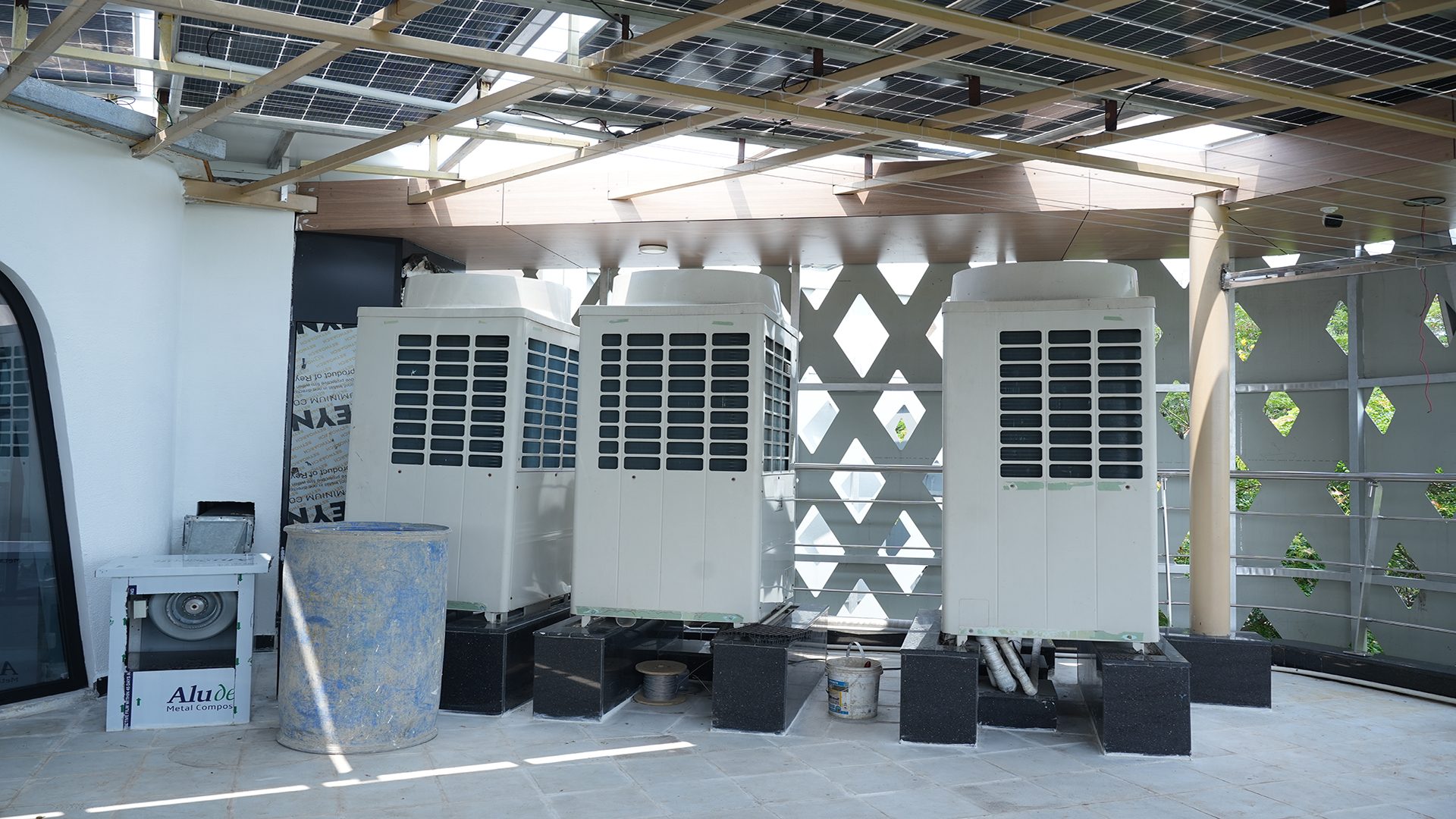
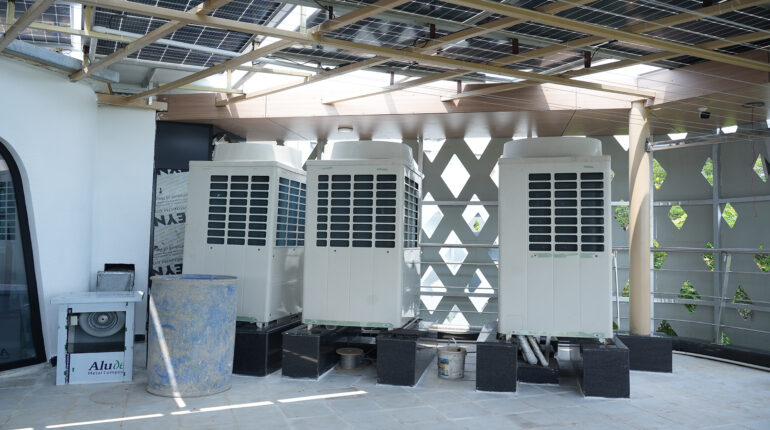
Variable Refrigerant Flow (VRF) systems offer precise multi-zone temperature control, ideal for residential & commercial projects. Variable Refrigerant Volume (VRV) systems provide similar benefits with enhanced energy recovery. For individual spaces, split systems are preferable which offer good efficiency & flexibility, whilst packaged units are tailor-made for centralized cooling. Each system has distinct energy benefits & ideal use cases depending on your project’s layout & cooling requirements.
3. air delivery systems: ducted vs spot cooling

Choosing between ducted & unitary systems influences both comfort & energy consumption. Ducted systems uniformly distribute cool air with improved quality & precise control, ideal for open layouts & commercial spaces. Spot cooling with hi-wall splits offers dedicated control at lower installation costs, perfect for individual rooms or retrofit applications. Matching the delivery system to your space utilization & architectural constraints is key.
4. indoor environmental quality considerations
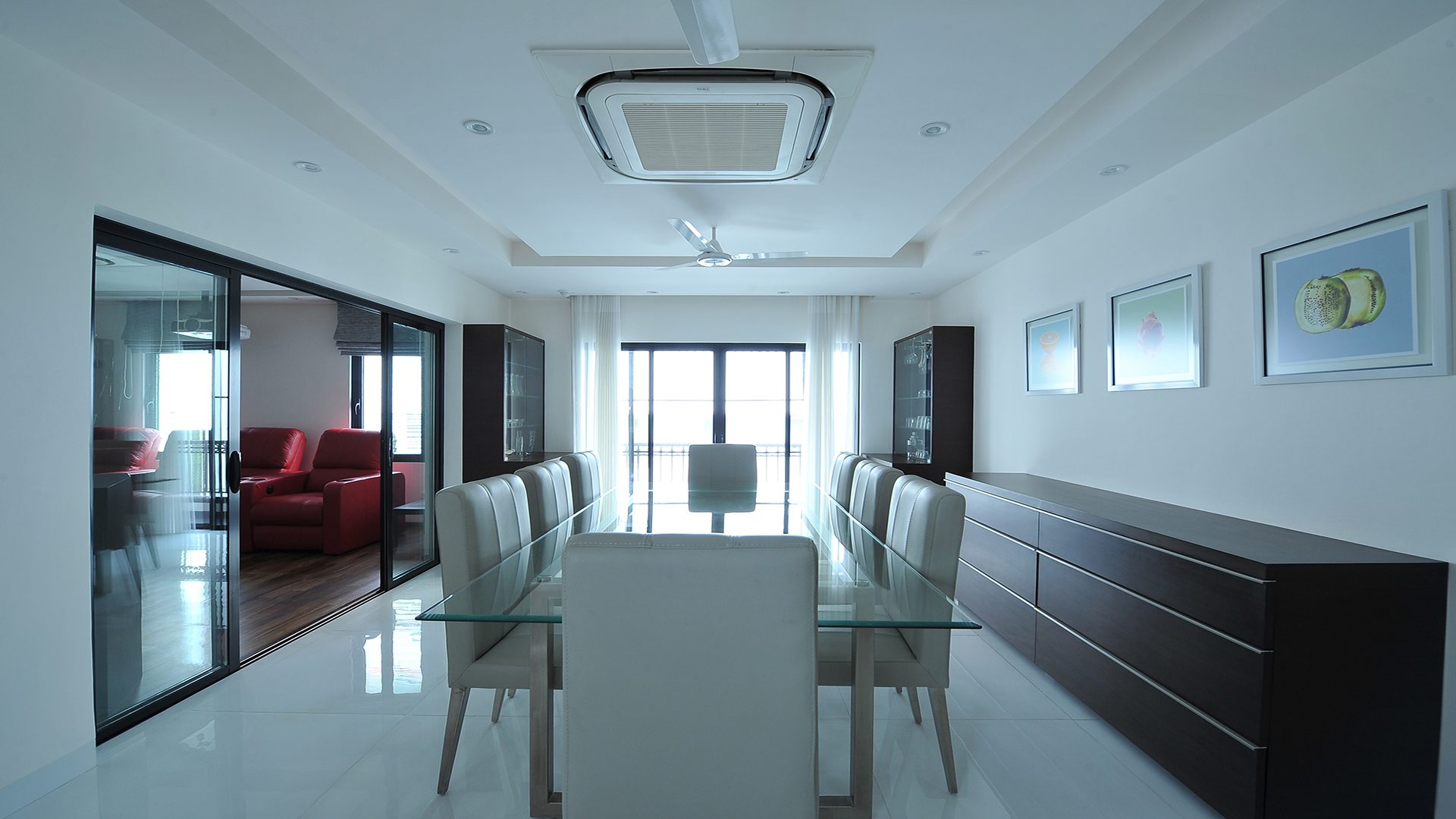
Indoor Environmental Quality supersedes temperature control. Global certifications like LEED set clear criteria for HVAC systems to deliver fresh air through filtration, humidity control & minimum airflow standards. In polluted urban environments like Delhi & Mumbai, integrated air filtration is vital for health, making system selection as important as cooling capacity.
5. cost analysis & payback periods
While energy-efficient AC systems require higher initial investment, the payback through reduced electricity bills is substantial. Premium systems like VRF’s can save 30-40% on energy costs compared to conventional units. 8-10 months of yearly air-conditioner use in tropics translate to significant savings. Account for systems maintenance, durability & electricity tariffs to understand true life-cycle costs.
6. Design considerations for coastal areas
Coastal regions encounter challenges like corrosion, humidity & temperature fluctuations. Air-conditioner installations in metros like Chennai, Mumbai & Kochi require anti-corrosive coatings, humidity-resistant components & enhanced ventilation design. Proper system selection & installation techniques can prevent premature failure & maintain efficiency.
7. passive cooling before active systems
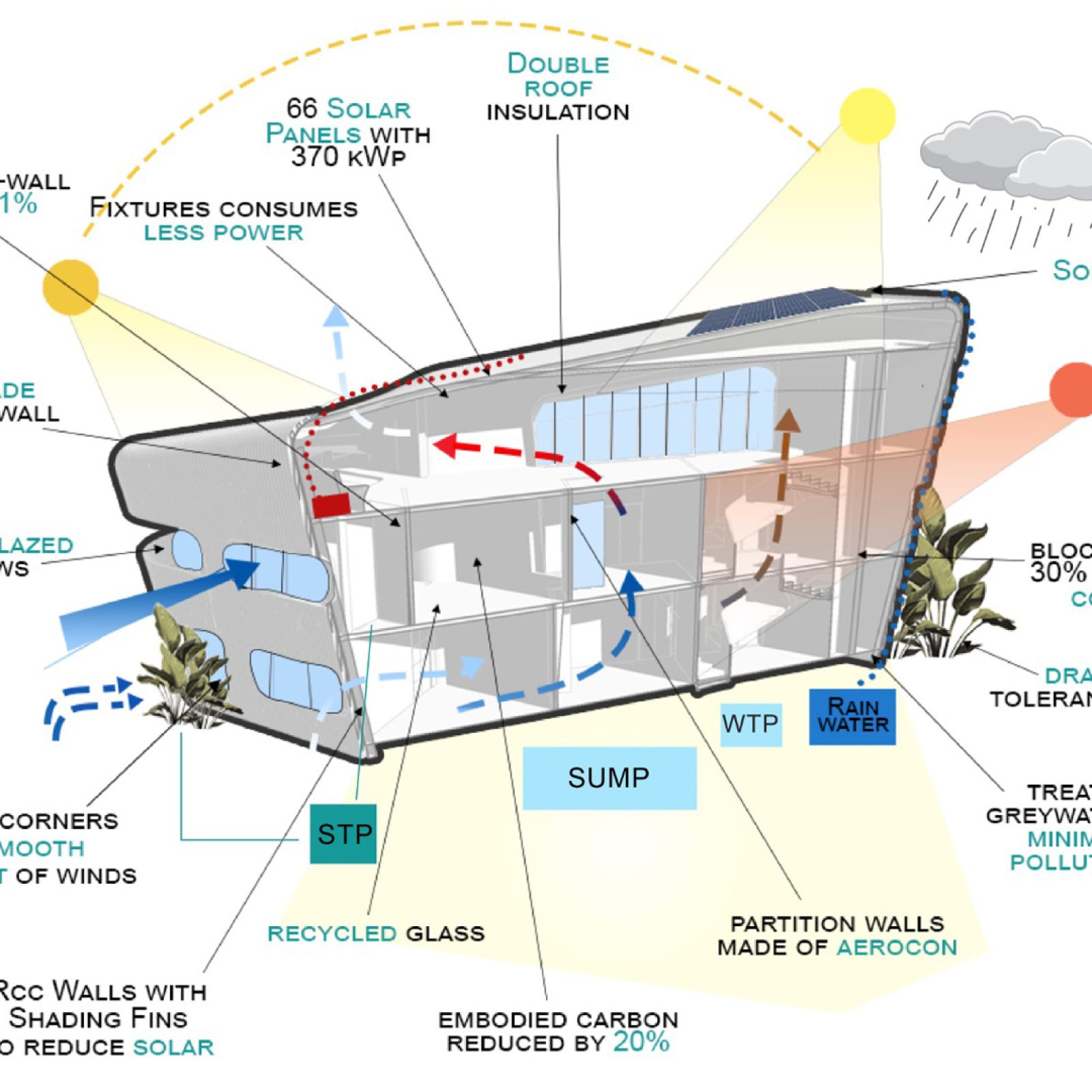
The most energy-efficient air-conditioner is the one you don’t need to run. Passive design techniques reduce cooling loads upto 60% by incorporating external shading, evaporative cooling, courtyards, installing ceiling fans & facilitating cross-ventilation, allowing air-conditioners to operate efficiently at reduced duration & considerably reducing energy consumption.
8. Professional Installation & maintenance
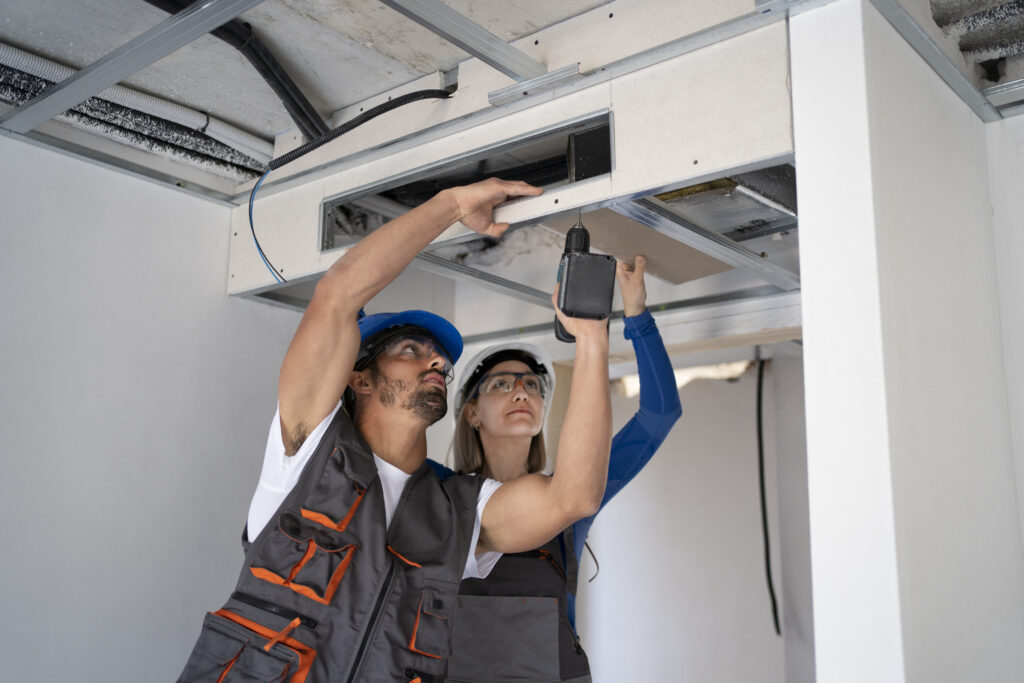
Even the most efficient AC system fails without proper installation and maintenance. Proper installations by qualified professionals is crucial, with systems commissioning ensuring the HVAC is set up & calibrated as per specifications. Regular systems upkeep by cleaning, refrigerant checks & filter requirements help maintain efficiency, while neglect can increase energy use by 20-30% & reduce durability.
As building codes tighten & energy standards evolve, future-ready AC systems ensure your project remains valuable & compliant. Prioritize your family’s health & comfort. Schedule a consultation with Midori for comprehensive climate control solutions.
about the firm
Midori Architects, one of the best architects in Chennai, is a multi-award-winning architectural firm founded in 2015 by Suraksha Acharya, a pioneer in sustainable architecture in India. Renowned for crafting climate-responsive & eco-conscious structures, the firm specializes in integrating advanced AC systems with passive cooling strategies for optimal energy performance.
Our team of innovative architects & mechanical engineers understand the challenges of tropical climate cooling. We seamlessly integrate active ventilation systems with passive solar design, and innovation to create comfortable, energy-efficient spaces that respond intelligently to India’s diverse climate.
From residential complexes requiring zone-specific cooling to commercial buildings demanding precise environmental control, Midori Architects delivers comprehensive solutions that balance occupant comfort with environmental responsibility. Our expertise in sustainable cooling systems, combined with a deep understanding of tropical architecture ensure every project achieves optimal performance while minimizing environmental impact.