
- admin
- /
Design That Breathes- 6 Quiet Strategies for a Greener Space
Did you know that buildings consume 40% of global energy and produce 36% of CO2 emissions? Yet most architects graduate without mastering environmental design principles that could revolutionize their practice & our planet’s future.
Imagine designing a residential complex in Chennai’s sweltering heat. Conventional solutions rely heavily on air conditioning, increasing energy bills & emissions, eventually compromising long-term sustainability. But what if that same building could cool itself naturally, cut energy costs by 60%, and enhance user health & comfort? This isn’t futuristic. It’s Environmental design in action—the holistic approach towards creating buildings & spaces using passive design strategies that operate harmoniously with the environment rather than against them.
How can architecture breathe with nature instead of resisting it? Discover 6 effective environmental design strategies that are climate-responsive, energy-efficient & elegantly future-ready
1. SITE RESPONSIVE PLANNING
Respecting climate & topography form the foundation of environmental architecture. A thorough climate analysis helps understand seasonal & rainfall patterns, solar exposure, wind direction specific to the site’s local topography & ecology. Architects can customise structures as per site conditions & existing vegetation, optimizing efficiency & comfort. Applying reflective, permeable materials & vegetative cover can immensely reduce the Urban Heat Island effect, crucial in densely populated metropolitans like Mumbai, Bengaluru, Chennai.
2. Passive Solar design
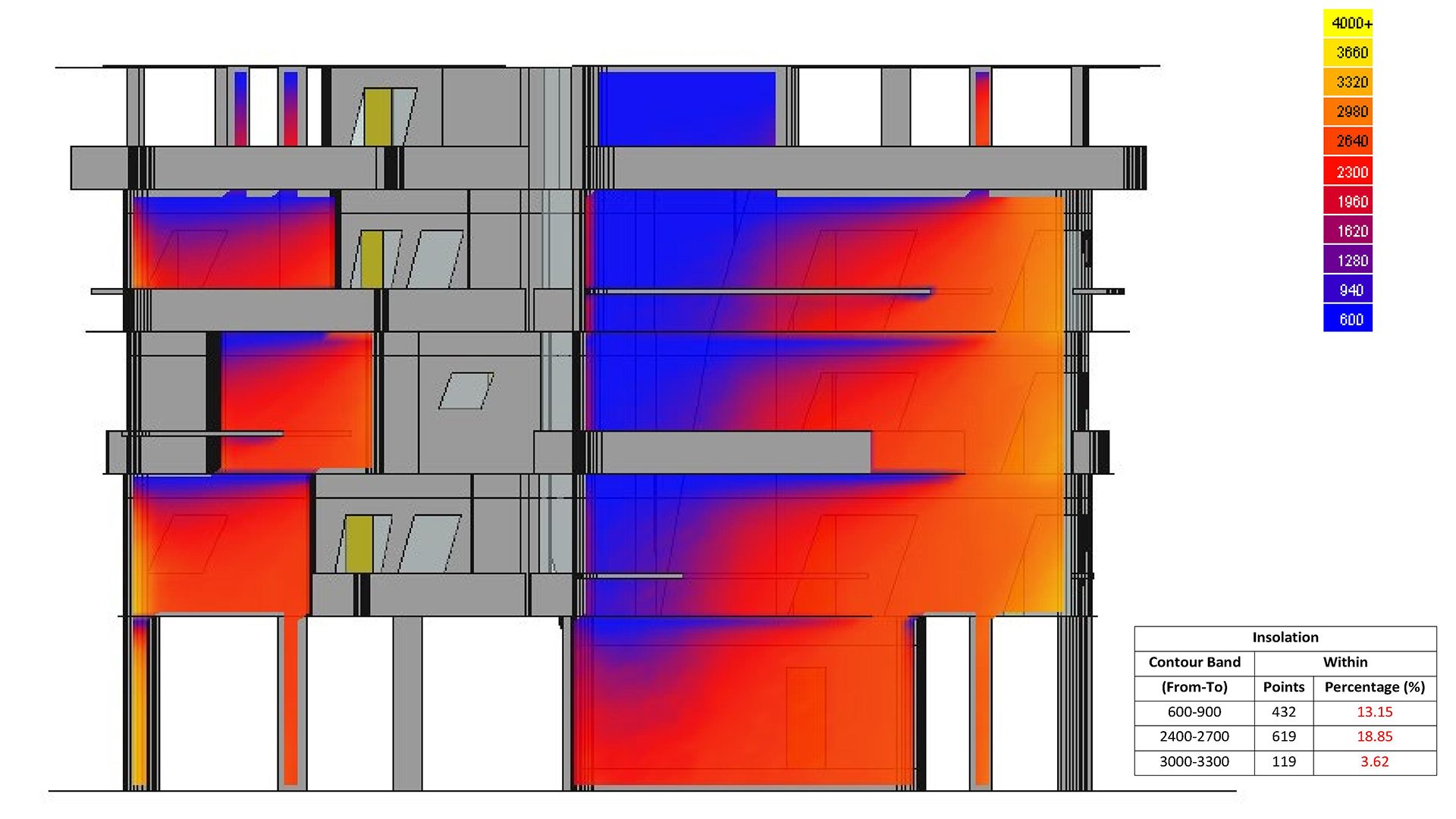
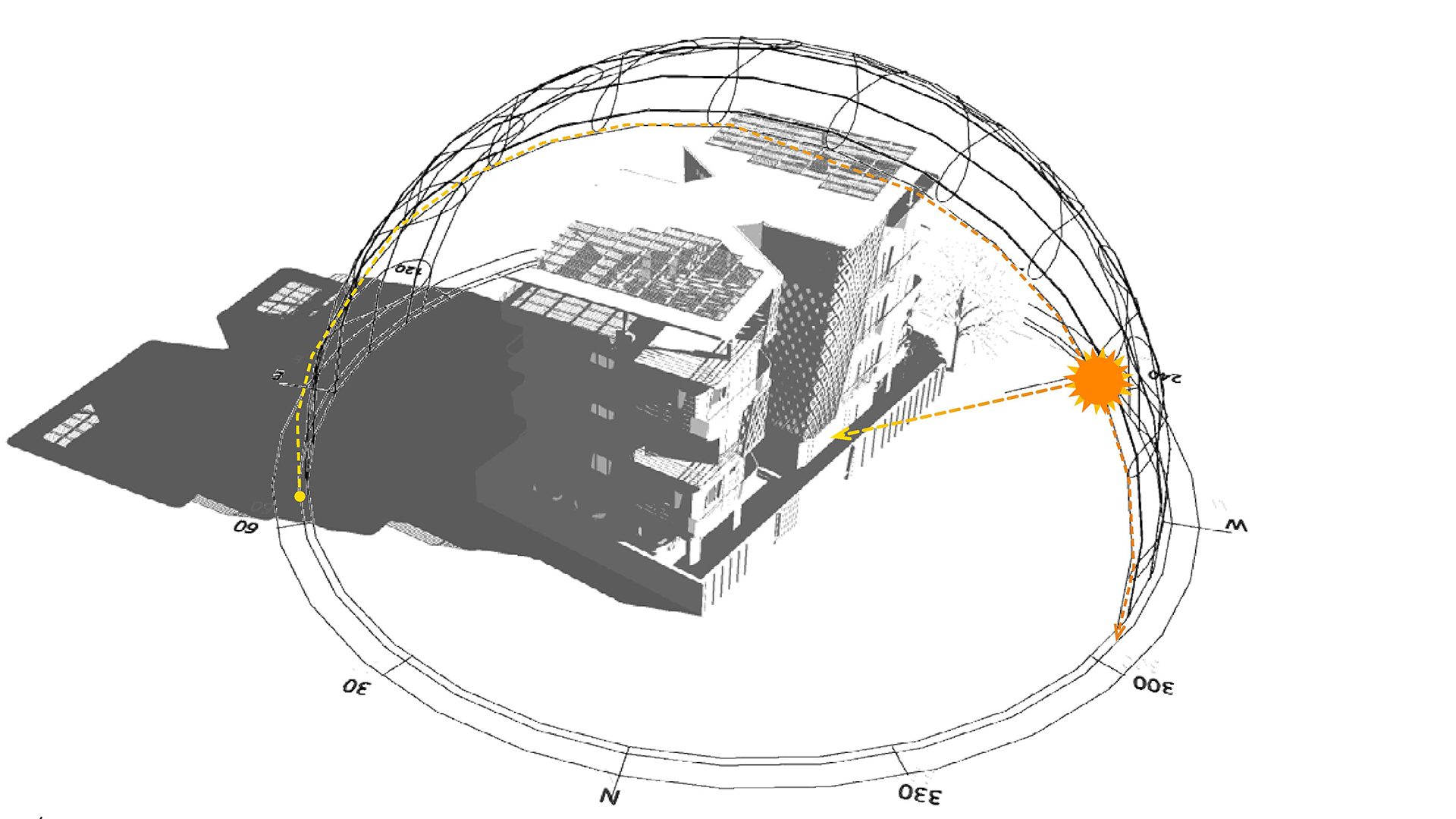
This significantly contributes in reducing heat gain & enhancing indoor comfort. By orienting building form with the sunpath, architects can harness passive heating during winters & passive cooling during summers, minimizing dependency on HVAC systems. One of the most compelling aspects of passive design is its deep roots in vernacular architecture. For instance, Kerala’s traditional slope-roofed homes are ideal for monsoon climates, while Rajasthan’s thick-walled havelis offer natural insulation against extreme heat. These time-tested regional techniques—like courtyards, wind towers & thermal mass—can now be reinterpreted with modern building materials & smart automation systems to create high-performance, environmentally responsive buildings.
3. sustainable material solutions
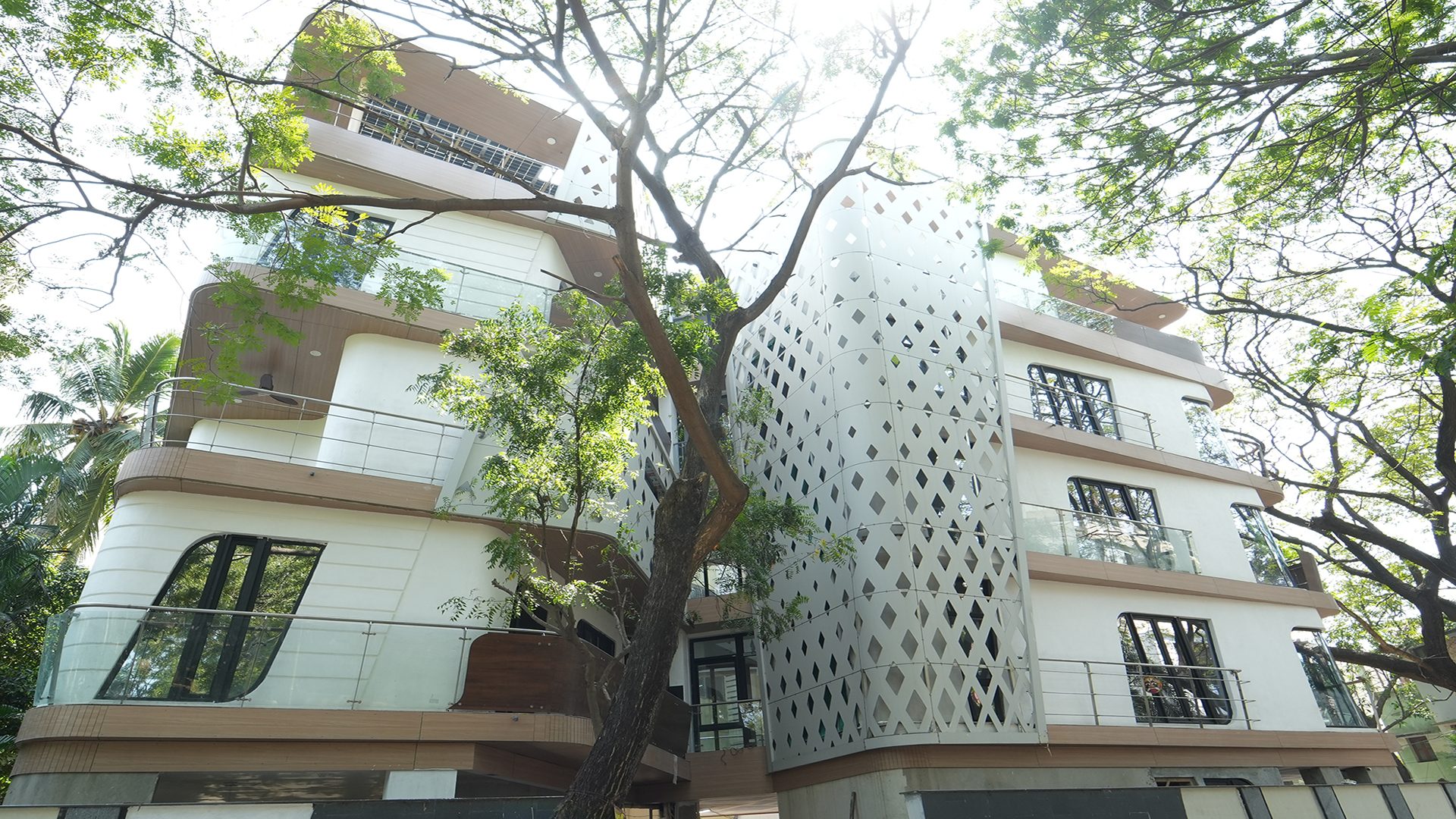
In 2025, choosing sustainable construction materials is a necessity than a trend. Prioritizing locally available resources reduces transportation emissions & supports regional economies. Material lifecycle assessments help architects evaluate a material’s environmental footprint from production to disposal. Selecting renewable, recycled, or low-embodied energy materials greatly minimize environmental impact. Moreover, avoiding toxic materials ensure healthier indoor air quality. In today’s context, sustainable material use is a competitive advantage for eco-conscious clients & developers aiming to achieve green certification standards like IGBC or LEED.
4. EMPHASIZING NATURAL VENTILATION

Naturally ventilated buildings eliminate dependence on the energy-intensive mechanical equipment. Energy modelling & performance simulations help architects predict airflow patterns, optimize window positions, inlet sizes & facade porosity to facilitate cross-ventilation. Incorporating ventilation shafts, atriums or thermal chimneys further boosts airflow & cooling potential. In 2025, Net-Zero Energy Buildings are becoming a financial & environmental imperative, as they assure 30-50% lesser energy consumption than conventional designs, with maximized indoor air quality at minimum operating costs.
5. integrated water management
Integrated water management systems are central to resilient, sustainable buildings. Swales, permeable pavements & bioswales reduce runoff & promote groundwater recharge. Rainwater harvesting systems store rainfall for irrigation or flushing, while natural filtration systems like sand beds or reed beds purify greywater for reuse. Integrating water systems with green roofs & planted terraces boosts urban biodiversity, reduces surface temperatures & enhances storm resilience. In water-stressed regions, these systems reduce utility bills & ensure long-term water security, an increasingly valuable asset in climate-adaptive architecture in 2025.
6. AESTHETICS + ENVIRONMENTAL PERFORMANCE
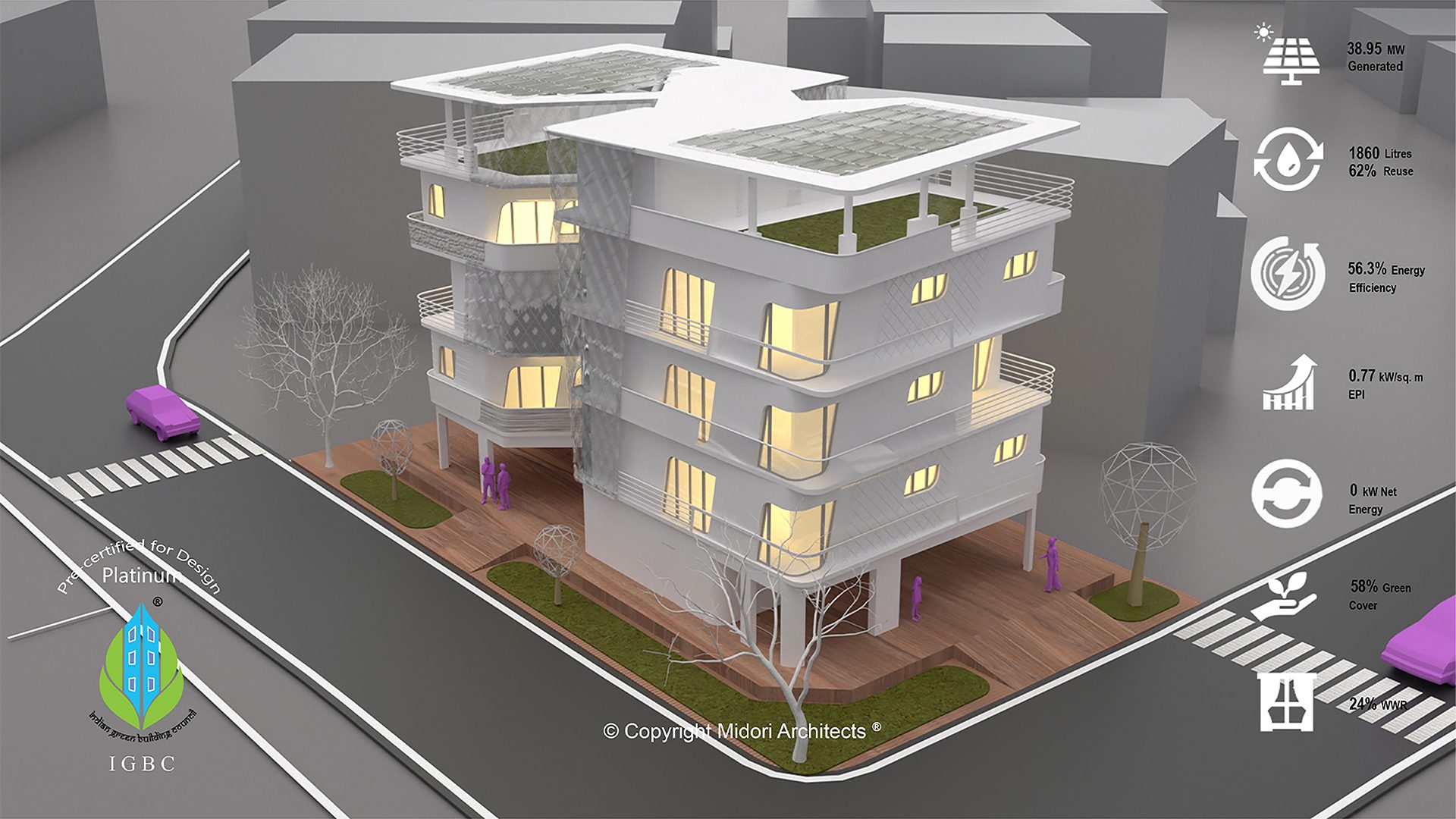
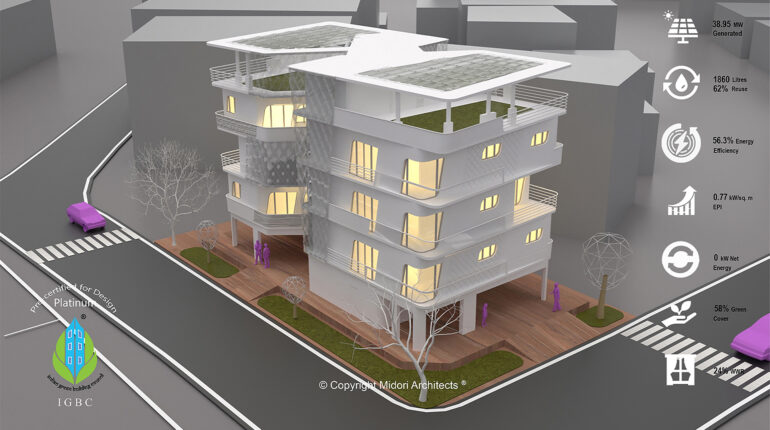
One of the biggest myths surrounding environmental design is that it sacrifices aesthetics for performance benefits. Environmental design enables creativity by working with nature. Projects like the Bhawar Residence by Midori Architects prove that sustainable architecture can be visually stunning—featuring double-glazing, native landscaping & vibrant forms that respond to the sun & wind, effortlessly blending sustainability with aesthetics. Using earthy materials, textures & parametric geometry, architects in 2025 can create visually striking & environmentally responsible buildings.
DESIGNING A GREENER TOMORROW STARTS HERE
Environmental design is no longer a niche—it’s the future of architecture. Today’s most impactful spaces respond to its environment, reduce ecological strain & enhance human well-being in a world that faces climate challenges & shifting regulations.
Firms embracing sustainable design are setting new industry standards—crafting innovative, climate-conscious spaces that resonate with clients & communities. In Indian cities like Chennai, eco-friendly buildings sell for 15–20% more, retain value longer & attract higher occupancy. Regulatory perks like faster approvals, FAR bonuses combined with rising demand from eco-conscious buyers make environmental design a clear market advantage in 2025.
Ready to create architecture that breathes? Partner with Midori Architects to design high-performing, future-forward spaces that are both beautiful & responsible.
Contact us today to begin your green building journey.
about the firm
Midori Architects, one of the best architects in Chennai, is a multi-award-winning architectural firm founded in 2015 by Suraksha Acharya, a pioneer in sustainable architecture in India. Renowned for crafting climate-responsive and eco-conscious structures, the firm is at the forefront of the 2025 movement for green building design.
Powered by a team of innovative young architects & planners, Midori seamlessly integrates site-responsive planning, passive solar design, natural ventilation & green materials to create high-performance, visually refined architecture. Every project reflects a commitment to energy efficiency, water management & biophilic design—pushing the boundaries of modern environmental architecture.